
Travel the back roads through 170 years of settlement. Discover the real Australia beyond the “Back of Bourke”, the wool sheds and homesteads of historic pastoral stations and dynasties. An exceptional journey into the very heart and spirit which made Australia, also a testimony to the world’s longest lasting living culture.
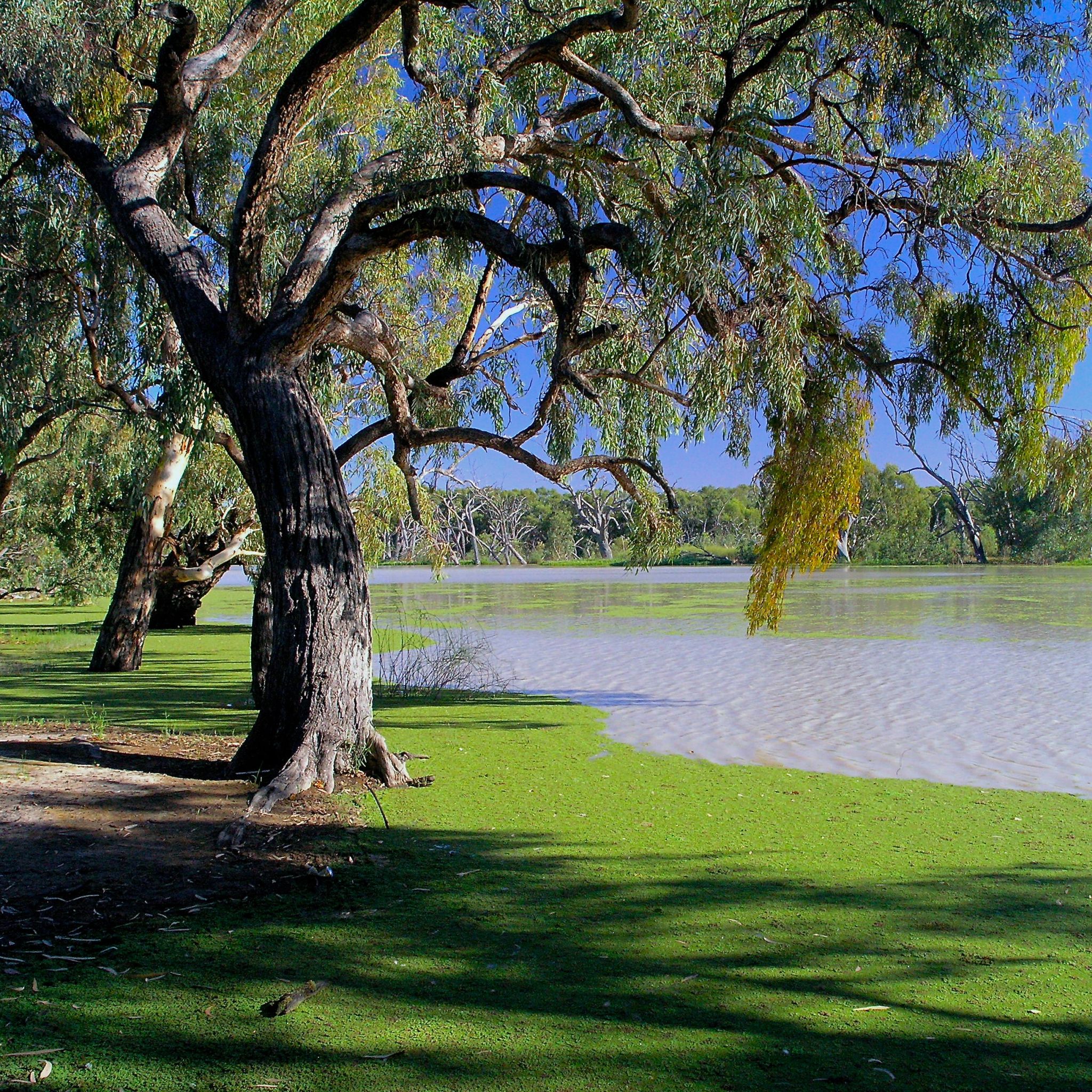
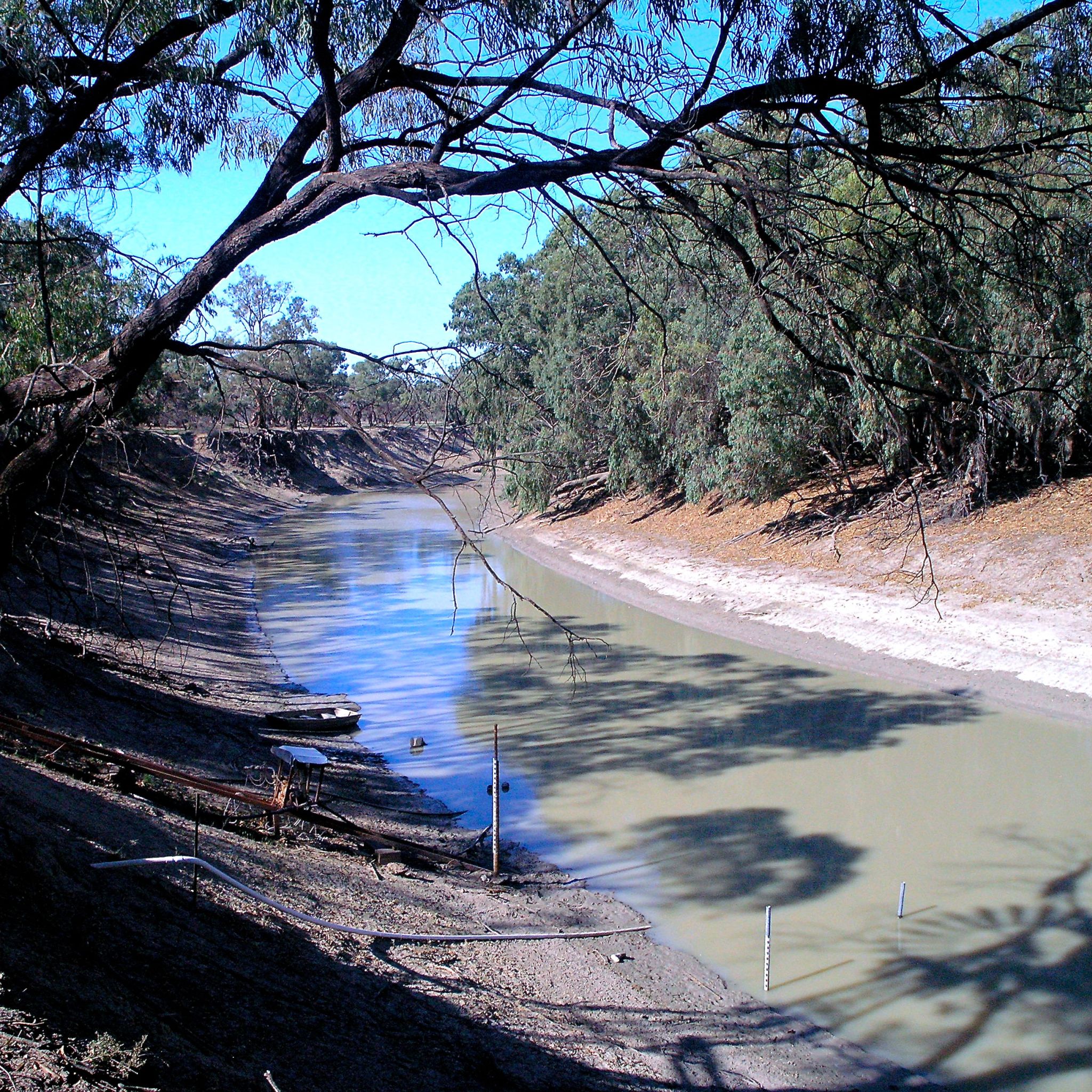
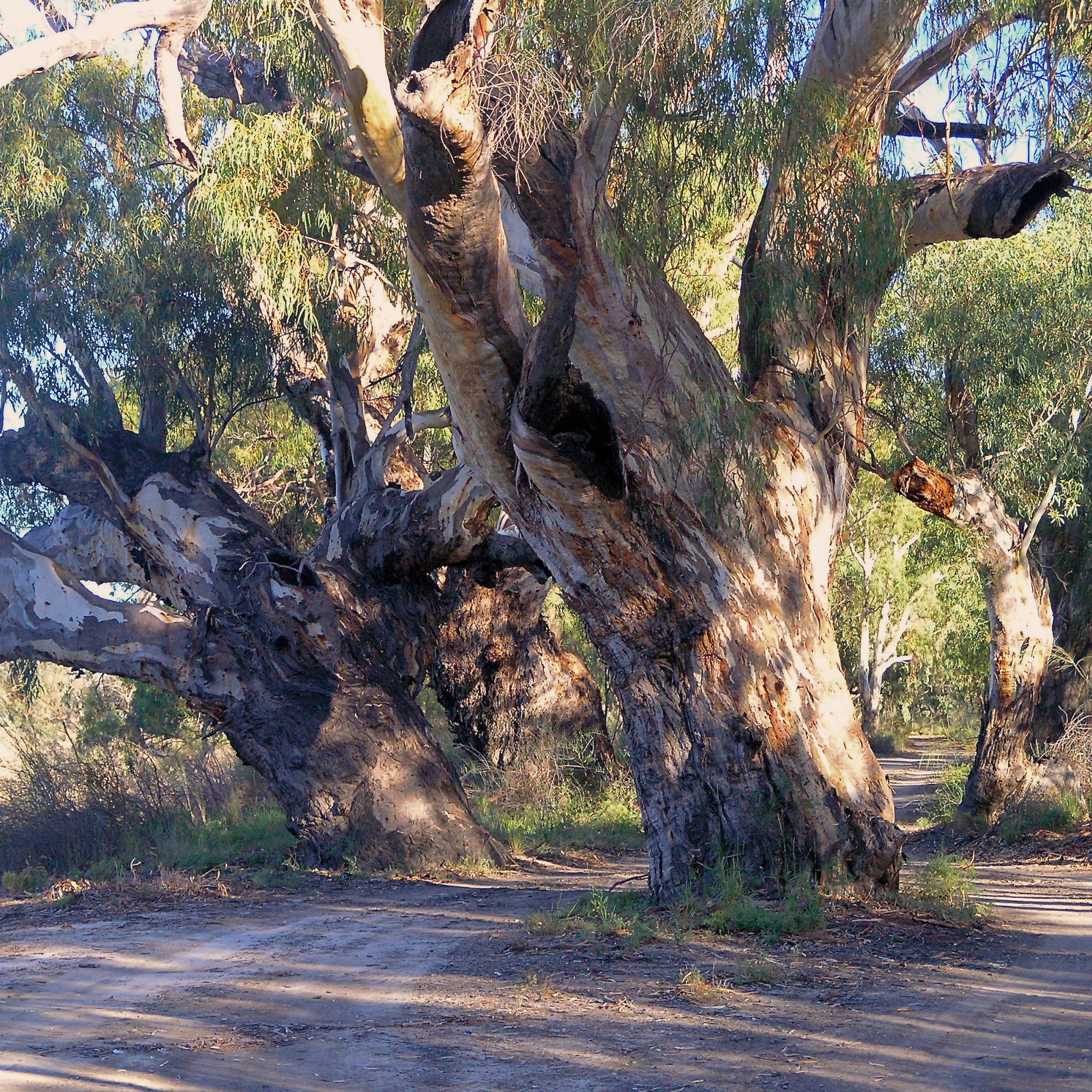
Picture yourself, strolling alone on the grand banks of the Darling River, with majestic River Red Gums and prolific birdlife enriching your experience.
- Imagine the days of 200 paddle steamers, hauling thousand of wool bales down stream from remote river ports to seaboard markets
- Learn more of the culture and Aboriginal communities which lived a life of plenty on the shores of world heritage Mungo Lake. How the sands of time have revealed the world’s oldest cremation and ritual burial sites of Mungo Man and Mungo Woman, the remains of 135 other modern humans and many extinct mega-fauna
- Follow Australia’s longest wildlife corridor, with its abundance of colour and species beyond the city reach
- Chat with self-reliant locals who have lived a life by the rivers, their fascinating stories of adaption to “droughts and flooding rains”
- Assimilate today’s environmental issues around sacred water resources, land management and climate, bridging the awareness divide. An informative experiential journey.
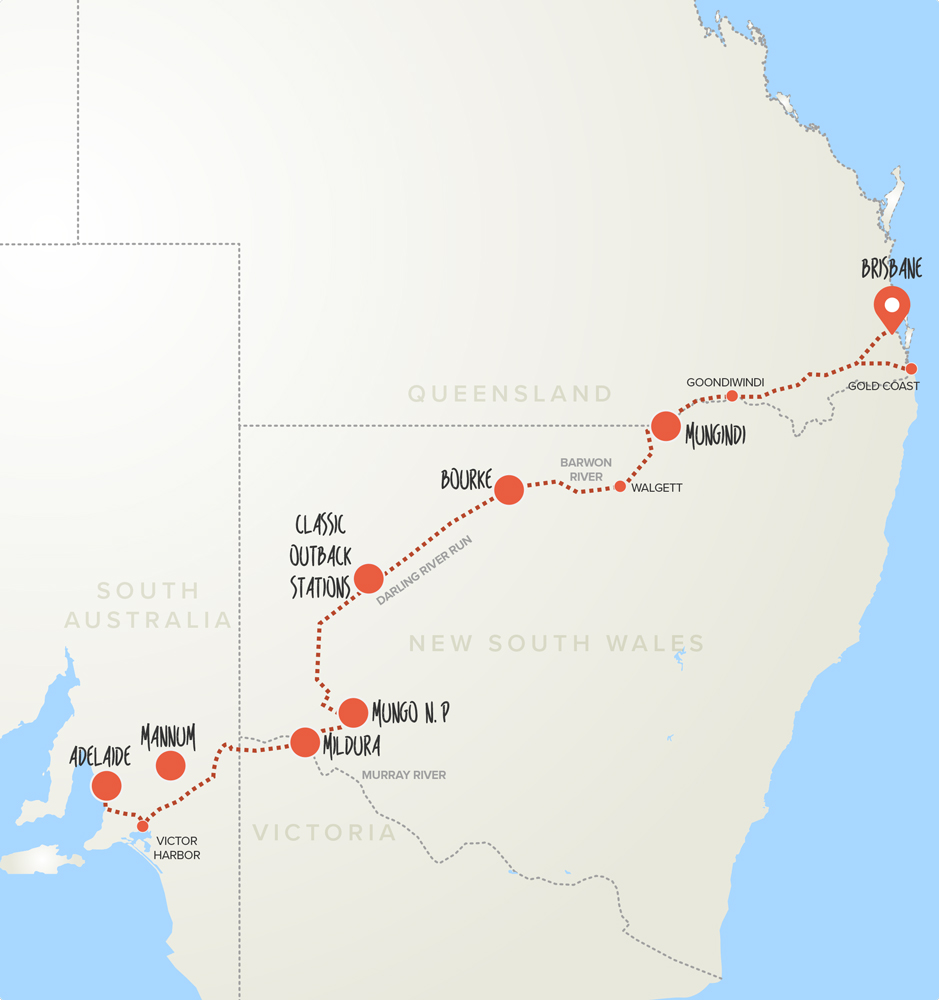
Day 1 Brisbane to Goondiwindi tracing the outback waterways from source to sea
Features
- View various tributaries of the Darling River basin following the theme “from source to sea” - insights into natural history along the waterways
- Condamine River at Warwick; MacIntyre Brook at Inglewood; Dumaresq River at Yelarbon; MacIntyre River at Goondiwindi
- Reflect on the towns and communities developed around and dependent on water
- Let your thoughts flow to water allocations and the environmental sustainability of inland rivers
- Consider the future of land management and degradation, the concept of finite natural resources
- Initiatives underway domestically and globally, addressing our sacred natural resources
- Consider the waterways as a life supporting wildlife corridor
- Enjoy full tour briefing and afternoon walk along MacIntyre River
Accommodation
- Quality country motel ensuite rooms
Travel
- Driving: 357 kms in 4 relaxed stages over the full day
Day 2 Start your back roads discovery of quaint country villages, headwater brooks, the life and times of humble farmers leading into cotton farming wealth
Features
- Passing through Boggabilla, the sleepy little hub with a "wobbly boot" pub now etched in Australian folklore.
- Diversions to the border river, The MacIntyre at Boonangar Crossing leading into the Barwon River and ultimately The Darling
- Lingering awhile in the dual border town of Mungindi famous for its heritage stump where the NSW/QLD border ceases to follow mountain ranges and rivers and strikes out west in a straight line to the Corner Country.
- Further local roads take you to Dirranbandi the village dependent economically on cotton. Time to roam the village before sunset and dinner.
Accommodation
- Comfortable en-suite country motel - Dirranbandi
Travel
- Driving: 245 kms in 3 relaxed stages throughout the day
Day 3 Lessons in Cotton Farming then an afternoon traversing the Kamilaroi nation, Indigenous wisdom and engineering
A day of awareness and reality as you pass through Kamilaroi lands and outback towns at the face of Aboriginal cultural issues and needs. Time to reflect on the skills applied to fishing 40,000 years ago and family “virtues we may profitably replicate”. But the day starts early with a local guided tour of the much maligned and celebrated Cubbie Station cotton enterprise, to consider the environmental, economic and social issues of this enormous engineering project.
Features
- A three hour guided tour of Cubbie Station followed by a light Dirranbandi lunch, then afternoon drive to the town of Bourke
- Pass through the remote border hub of Hebel where a local station owner bought the curious pub and offered free meals to the few ageing citizens in a spirit of keeping his town alive.
- The proud and wide ranging Kamilaroi People were one of the four largest nations in Australia. From the Hunter Valley to SW Queensland they frequented the river valleys, the Barwon River and places around Collarenebri and Walgett
- The Kamilaroi were fierce warriors but had virtues families of today “might well replicate”. So it was written in 1882 about their morality, their respect for wisdom and age, care of the sick and infirmed, and children committed to meagre fare
- Here was the far extremities of the paddle steamer river services of the 1800’s which made possible a nation growing on the sheep’s back
- Near Brewarrina the Barwon becomes the mighty Darling River, once described as Australia’s Mississippi after the great inland waterway of the USA
- The ingenious design of Aboriginal Fish Traps on the edge of Brewarrina township, said to be 40,000 years old, are evidence of a people rich in engineering skills
- Pass by Hospital Creek where the massacre of 400 Aboriginal People took place centred around the abduction of an Aboriginal woman or killing of a white stockman. Differing accounts confused in time
- Nearby, from a dusty clay pan to lush grazing pastures a young couple regenerated their land following the holistic farming principles of Rhodesian biologist Alan Savory
- Late afternoon arrive in Bourke for a two night stop and local exploring.
Accommodation
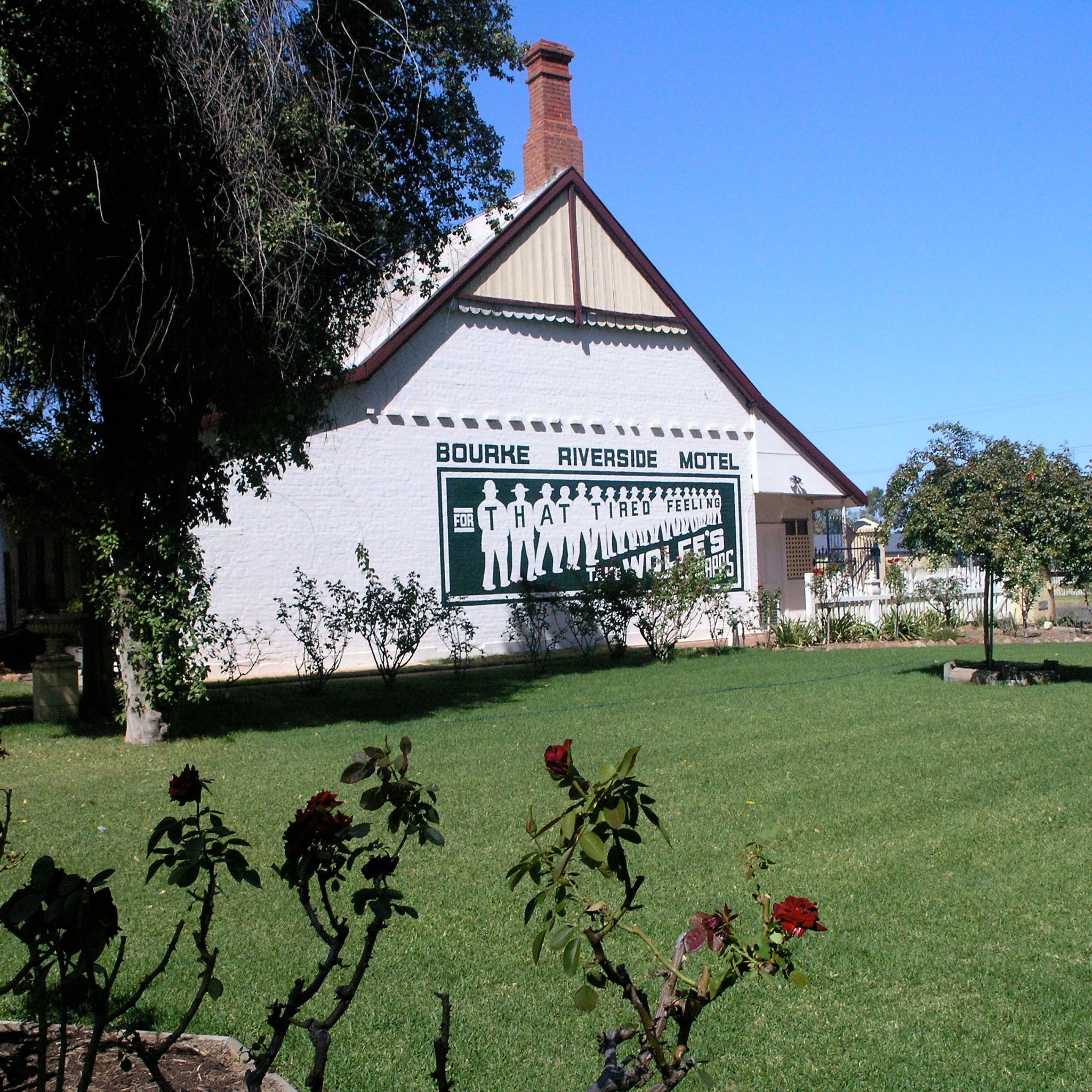
- En-suite rooms at a Bourke country motel - 2 nights
Travel
- Driving: 319 kms in 4 relaxed stages throughout the day
Day 4 Decide for yourself - are there “sunlit plains extended” beyond the Back of Bourke?
Features
- Poet Will Ogilvie wrote of Bourke being the “bitterest land of sweat and sorrow”, but if he were free he’d be off to the “Back of Bourke” tomorrow
- Head to the Back of Bourke Exhibition Centre to assimilate with this iconic oasis town etched firmly in Australian inland river history
- Here the people are a resilient bunch with an old bush spirit, defying the dry seasons and the derogatory verse of poet Henry Lawson when sent to go experience the bush
- Colonial surveyor and explorer Thomas Mitchell found himself in conflict with the local Aboriginal people and created “Fort Bourke”, for the protection of his men and their stores
- The last resting place (and stone of reflections) for internationally acclaimed eye specialist Prof Fred Hollows is found here in the company of other unsung outback heroes. The place of his choosing where he had contributed so much to eye-health in Indigenous communities
- Gundabooka National Park offers a short walk to the Mulgowan (Yappa) Aboriginal Rock Art gallery and a spot of birding along the way
- From the nearby rumbling of Mount Oxley in 1828, explorer Charles Sturt looked over his expedition pathway toward the Darling (no better seen but at sunset) and reported a strange gun discharge which he surmised to be a gaseous explosion from within
Accommodation
- En-suite rooms at Bourke country motel
Travel
- Driving: 150 kms of random local travel throughout the day
Day 5 A taste of adventure and outback pastoral history unfolds along the “Darling River Run”
Features
- Commence an excursions down the Darling River Run, to the village of Louth, following the east bank
- 218 steamers once plied the Darling, travelling up-stream with stores for isolated pastoral stations and returning with their wool bales, bound for export to Europe
- In the peak years, sheep stations were up to 2 million acres shearing 500,000 sheep
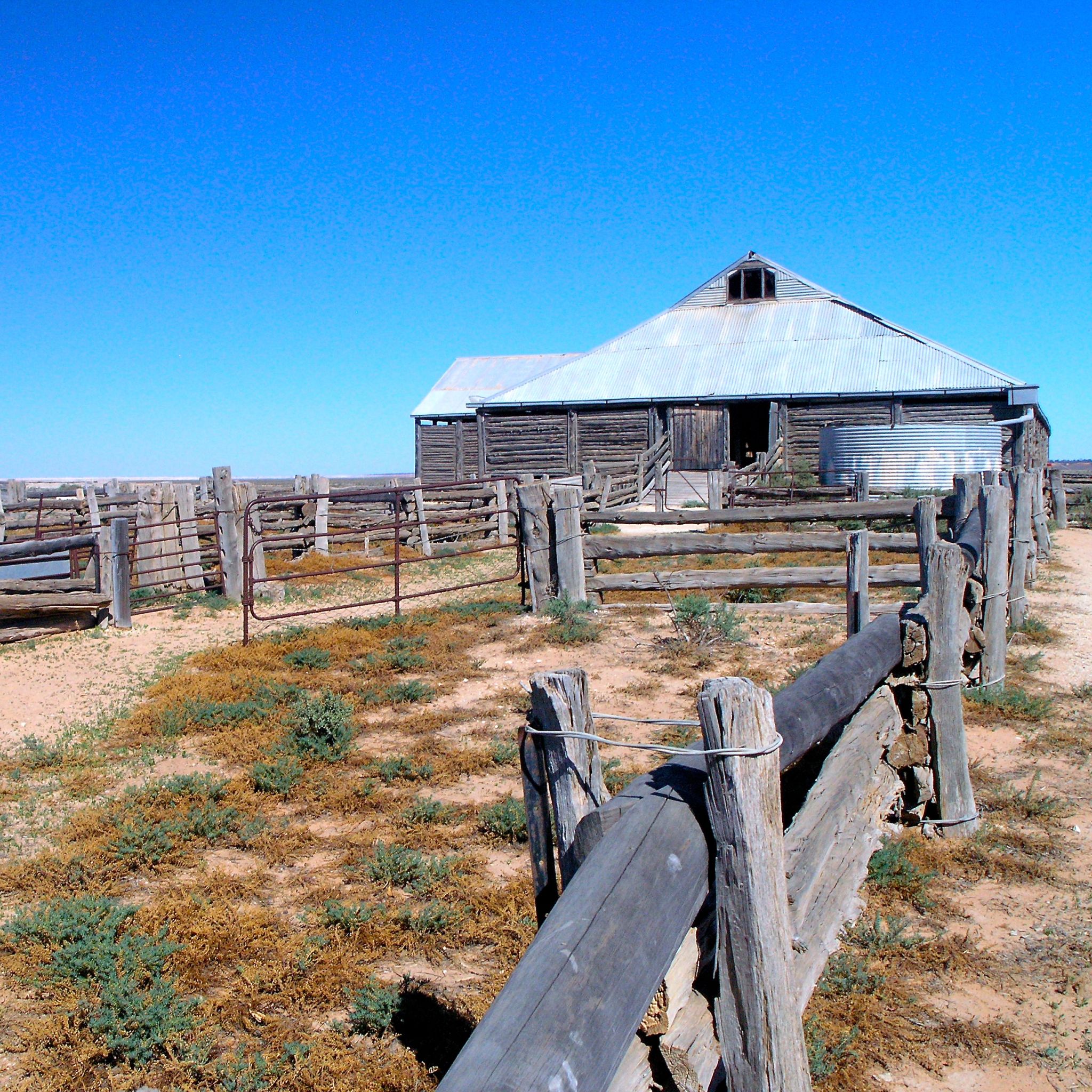
- Visit the most historic of them all, Dunlop Station, where in 1888 it led the world in a revolutionary experiment in mechanical shearing
- Lunch at the one and only Shindy’s Inn pub offers “the best potato chips for 100 kms” and other fascinating insights into country hospitality and humour
- A “shining headstone” has long been the talk of the town apart from the annual races which today, for a brief moment, attract 5000 socialising country folk and visitors
- Divert to Cobar, established in 1870 as the centre of base metals, copper and gold mining in outback New south Wales
- Explore the town and its 19th century colonial architecture and gaze into the open cut mine pit near town centre from Fort Bourke Hill. The best Cobar vista, particularly at sunset
Accommodation
- Quality en-suite rooms at country town motel
Travel
- Driving: 228 kms in 3 relaxed stages on back roads throughout the day
Day 6 Sensitivity is central to an understanding of Aboriginal rock art and communities
Features
- Departing Cobar, divert to Mount Grenfell to view an historic rock art site important to the clans and people of the Ngiyampaa nation. In 1859 it was the Ngiyampaa people who were massacred at the Hospital Creek site visited, near Brewarrina
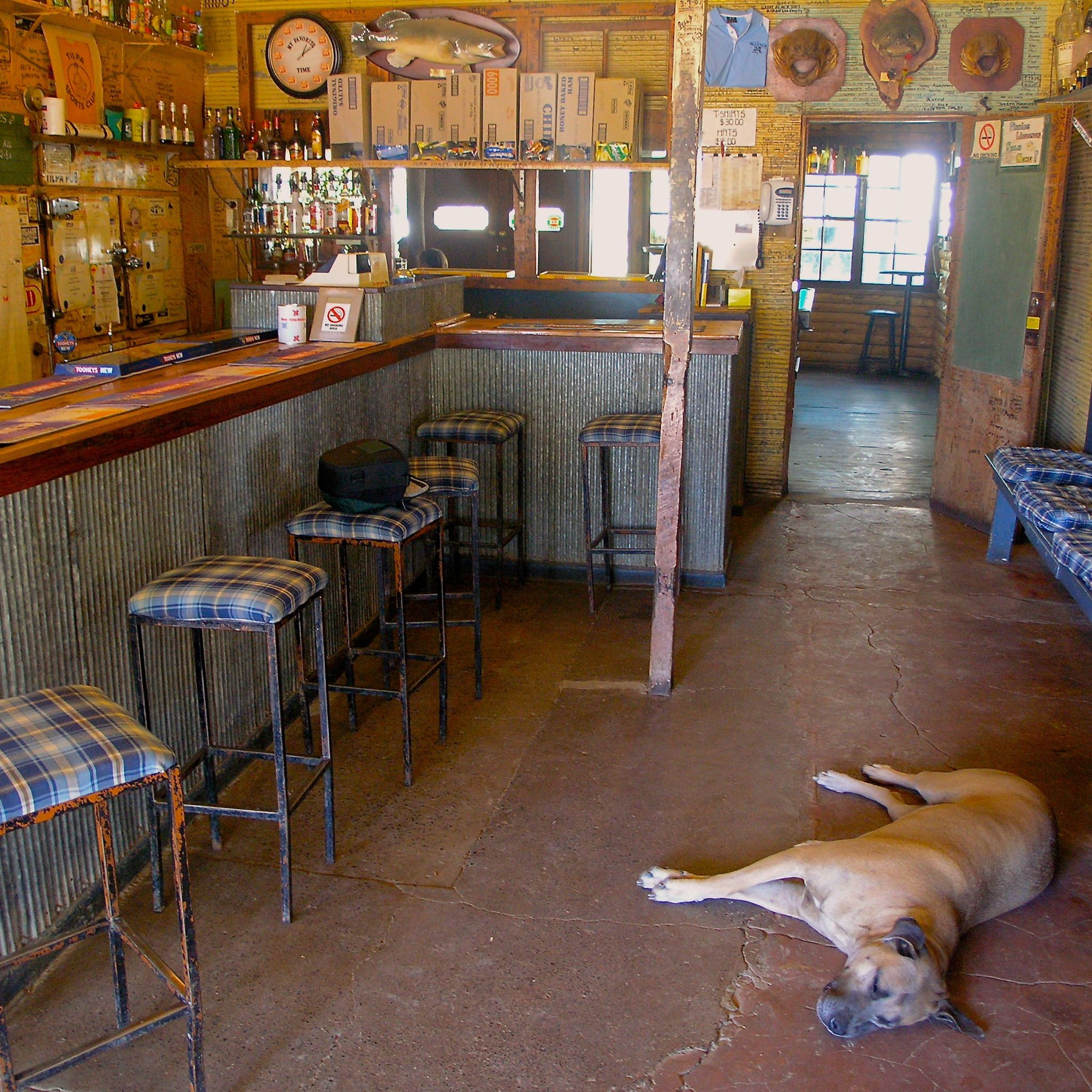
- Rejoin the Darling River Run at the curious village of Tilpa with its iconic corrugated iron pub on the river bank, then follow the river and vast flood plains to Wilcannia
- Wilcannia has a fascinating history as a river port town and is home to the Barkindji people who have lived in the area for 40,000 years
- The Wilcannia name is Aboriginal for “gap in the bank where the flood waters escape” acknowledging the Darling River has a history of breaking its banks. But floods and droughts are a boom and bust affair in the outback
- The most striking visual surprise is Reid Street with its selection of wonderful sandstone buildings developed from local stone in the mid 1800’s
- Rejoin the Darling River Run again and follow the east bank to Menindee
- The barge Moorabin was in tow of the steamer Renmark when it struck a snag and sank in the Darling River near Billilla station in late 1925. Master of the Renmark, beached the barge before it sank lower, allowing much of its cargo of 800 bales of wool to be saved
- At Menindee there is a lake system often under stress. Late afternoon and tomorrow, view the lake-scapes and reach an understanding of local water issues, the affects on people and wildlife
- Explorers Burke and Wills enjoyed their last indulgences at the Maiden’s Hotel en route to their tragic expedition. Dine in their memory and chat with locals at the “Maidens”.
Accommodation
- Comfortable but modest ensuite rooms at country motel
Travel
- Driving: 472 kms outback travel in 4 stages on both highway and bush roads
Day 7 Explore the heart and soul of grand old outback sheep stations and genuine Australian hospitality
Features
- Menindee was discovered by surveyor, explorer Thomas Mitchell in 1835 after which it became “the last outpost of civilisation” and a “jumping off place for the interior” exploration
- Skirt by the lakes and follow the Darling River through Kinchega National Park and its corridor of stately River Red Gums. Walk the Darling billabong and visit the historic homestead site and woolshed of a once vast pastoral station
- Settle in for the day and night at Bindara Station (1849) with its wealth of colonial and river history and legendary hospitality to match, a self sufficient bio-organic orchard and veggie garden and riverbank trails to wander
- Originally called “Netley”, one million acres stretching from the river to the South Australian border, in a good year it ran 115,000 sheep, 750 cattle and 820 horses all managed by 200 staff
- Discover the majestic homestead of red bricks sourced and fired on the property with other building materials transported up the river by paddle steamers
- The station once boasted its own store, pub and school and was a river stop for the “steamers”. Large parts of the property were resumed by government after the world wars and the river frontage section was sold to the wealthy Packer family in 1936 and named “Bindara”
- Current host Barb and her husband purchased the property in 1981. Barb has lived on the river all her married life, educating her two children through the long distance School of the Air
- Wander through history or along the river bank, pausing to sit and ponder the sounds of nature and particularly some of the 150 bird species
Accommodation
- Ensuite cottages at historic pastoral station homestead
Travel
- Driving: 43 kms nominal local access bush tracks
Day 8 Back roads lead to the remarkable archaeological discoveries of World Heritage Mungo Lake
Features
- A reasonably early start with a host history tour of Bindara, then follow local directions on back tracks to the old port of Pooncarie, scheduling a M/Tea break in the quaint little village (population less than 50)
- On the track outback, pass by old pub sites set strategically every 30 kms or so, to service the old stage coaches run by the “cattle king”, Sidney Kidman and his partners
- View old school sites, lookouts over the Darling, other station homesteads and The Great Anabranch of the Darling which fills and flows parallel to the Darling all the way to the Murray River, once the main river reaches 6 metres
- Lunch at the modern and luxurious Mungo Lodge
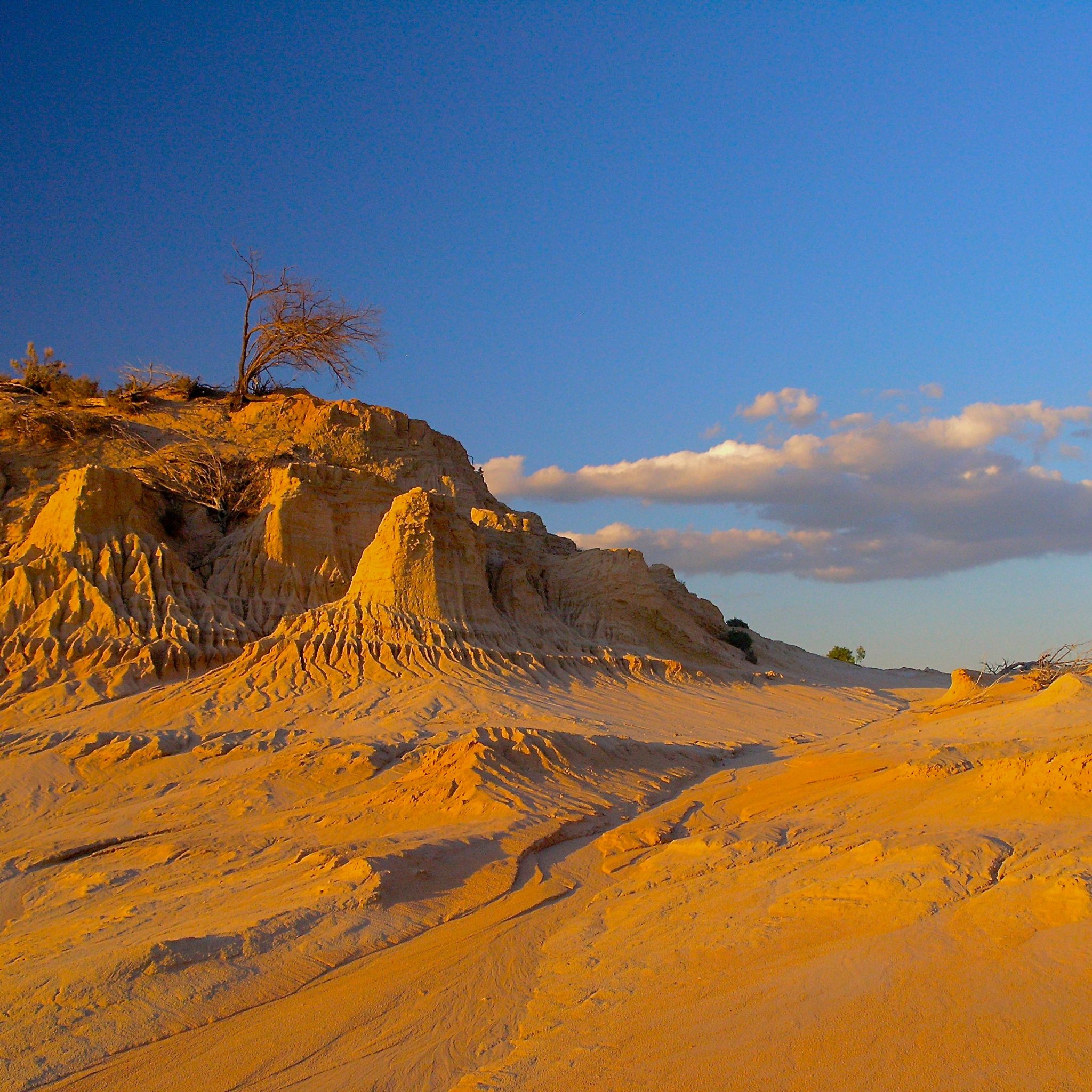
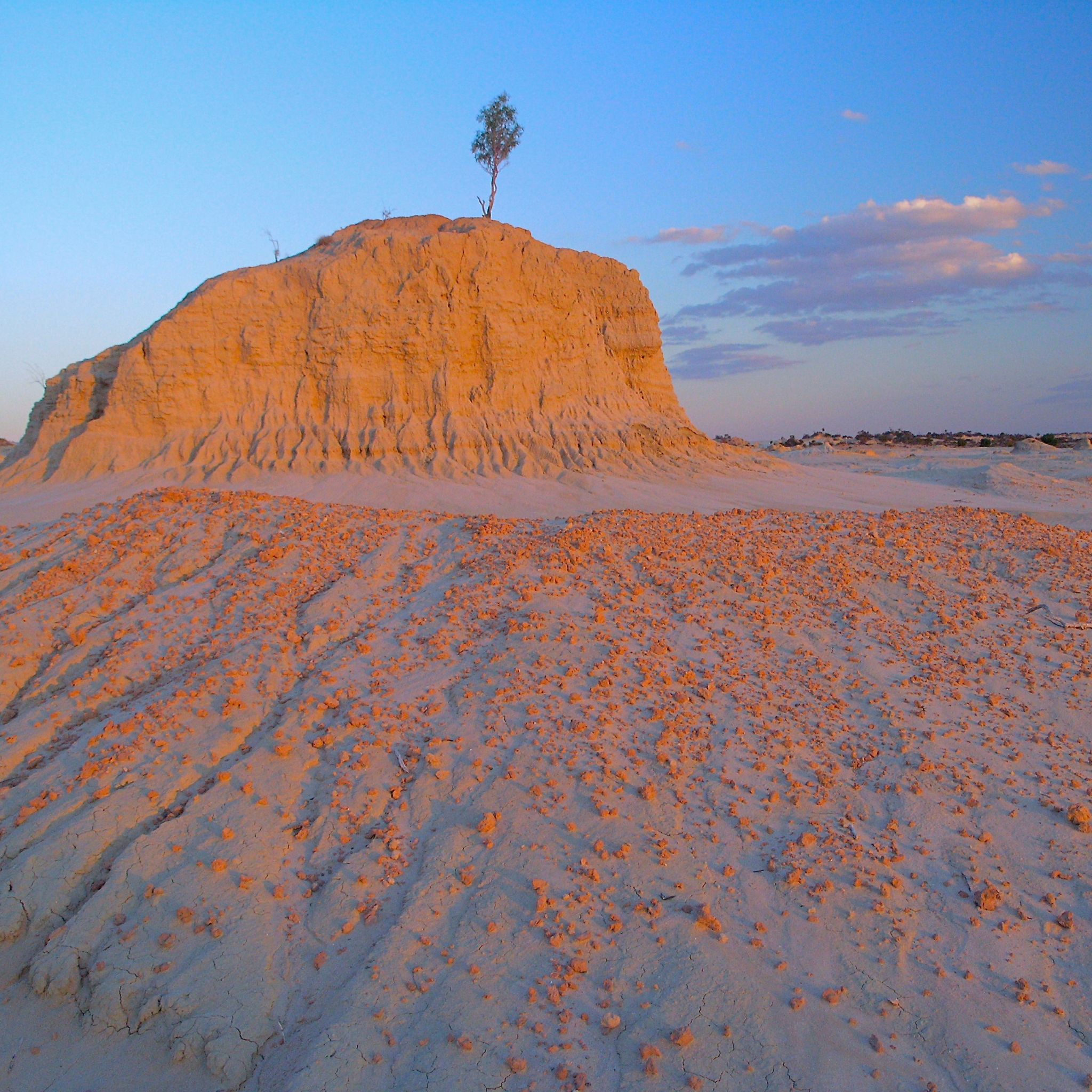
- Devote the afternoon to the archaeological and landscape wonders of Mungo National Park, specifically short drives and guided strolls to local features and sun setting on the Walls of China
- You are in the heart of the world heritage Willandra Lakes region encompassing Mungo
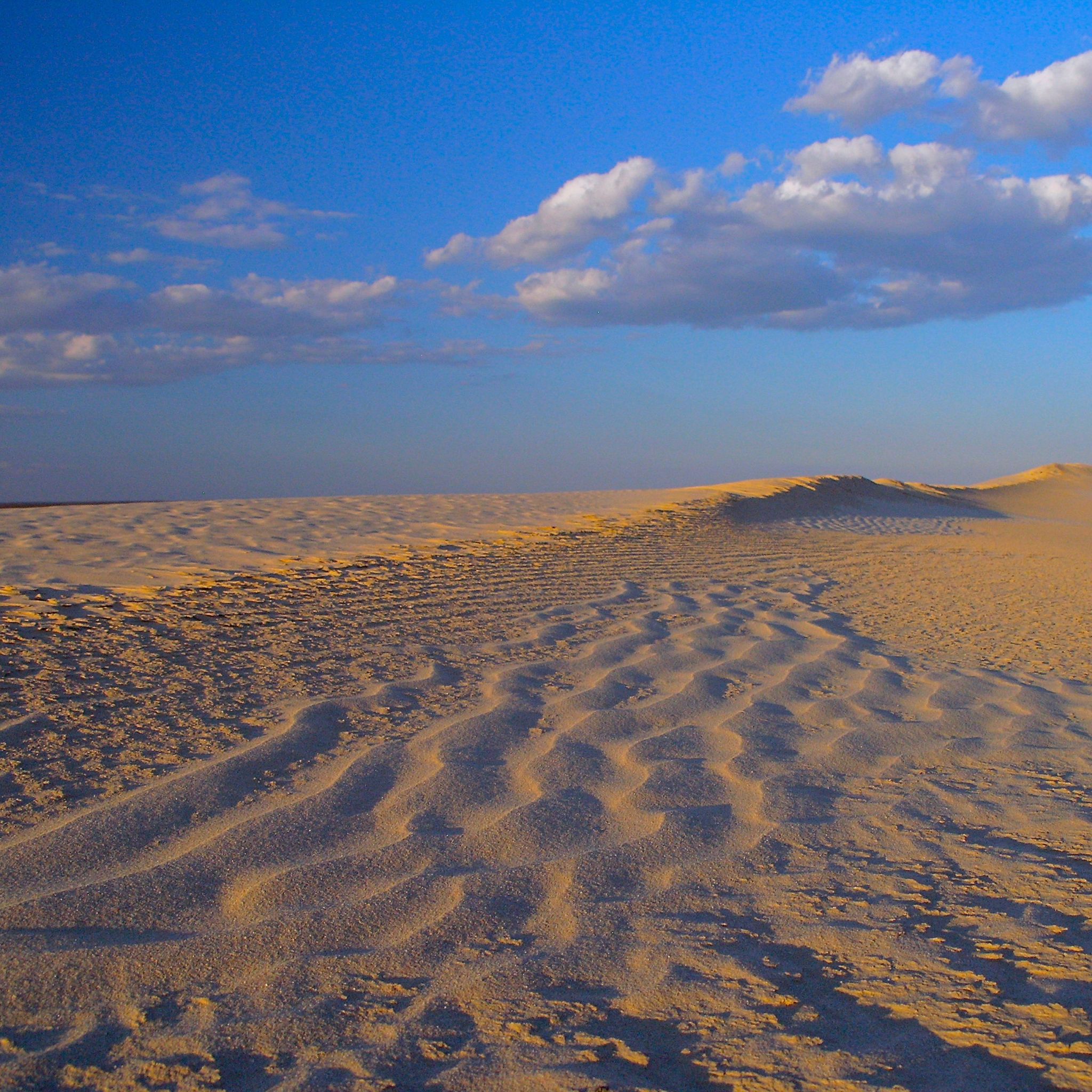
- Drying up of a great inland water system and wind blowing across the dry Mungo Lake bed has created an amazing lunette landscape of dunes, ancient shorelines stratified into layers of sediments.
- Our First Peoples once lived on the lake shores more than 40,000 yrs ago when the lakes provided an abundance of food.
- The once buried Mungo Woman was uncovered by winds in 1969 on the western shore and 175 bone fragments were reassembled suggesting her age to be 40,000 yrs. Five years later, Mungo Man was revealed in what is said to be the oldest known cremation site in the world, now dated back some 68,000 yrs.
- There has also been evidence of many primitive and extinct animal remains.
Accommodation
- Quality ensuite cabins at luxury outback lodge
Travel
- Driving: 231 kms in 3 stages on back roads to Mungo National Park
Day 9 Journey through unique Mallee Country in search of the Murray - Darling Rivers junction
Features
- After a dawn return to the Walls of China, your holiday changes character but not historic relevance. Take the back roads through Mallee country to Mildura
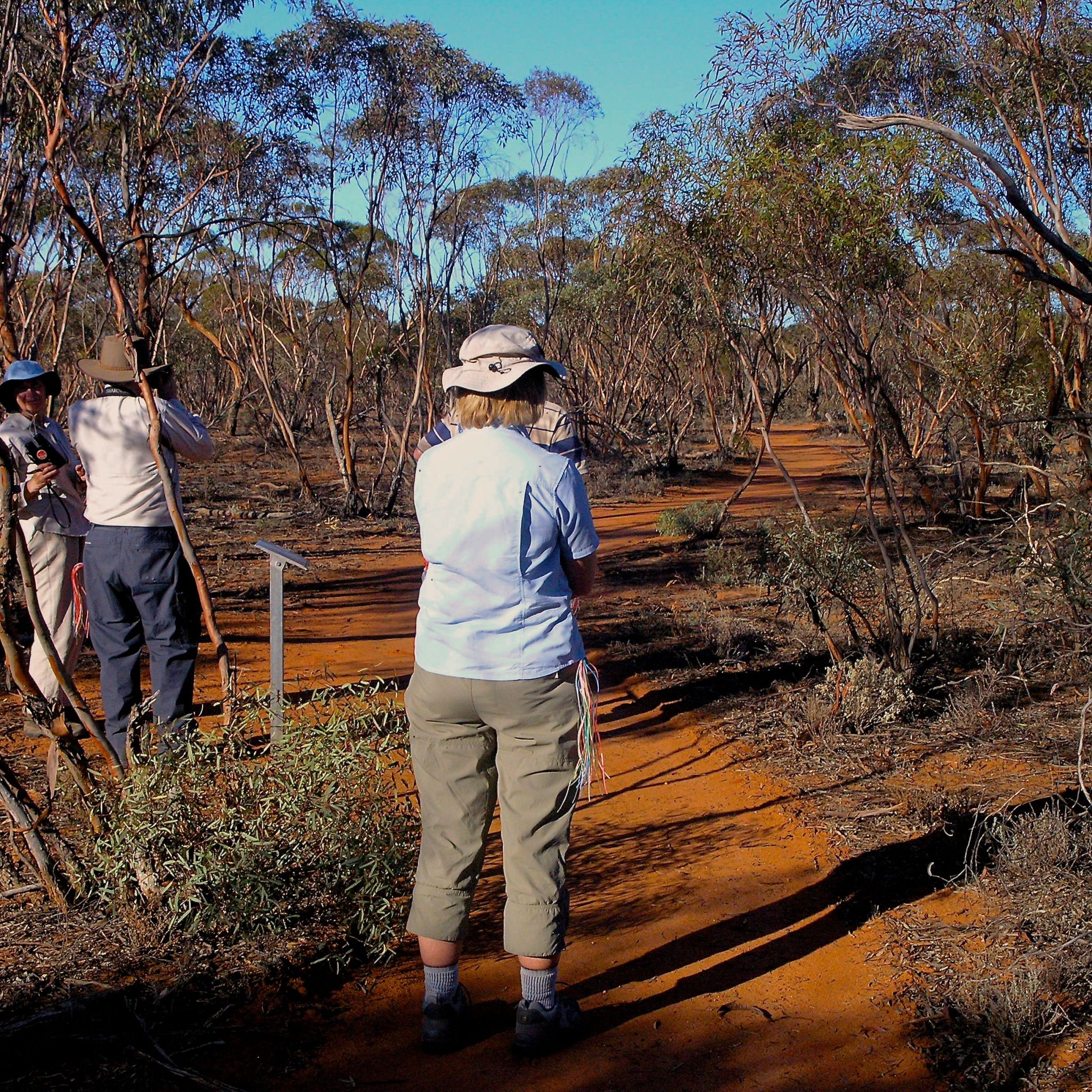
- Mallee country, a unique ecosystem of characteristic Eucalypt trees difficult to tame, possessing fast regeneration capacities after disturbance or fire. Growing in dry sandy country with few water courses but accepting rain like a sponge
- Mallee makes great firewood leaving little ash, is a provider of Eucalyptus oil and home to the very shy and concealed Mallee Fowl
- Visit the Murray and Darling River junction at Wentworth and reflect on a history of life and transport on the Murray, plus the network of locks and weirs that service the irrigation system and established food bowl
Accommodation
- Ensuite rooms at regional motel
Travel
- Driving: 175 kms in 3 stages throughout the day
Day 10 The river scenery and experiences change dramatically with demands of industry and pleasure
Features
- Bid farewell to the Darling River and travel from village to village down the Murray River headed for “the mouth”, passing through the Riverland, a large wine producing region. Millions of stone fruit, citrus and almond trees adorn the landscape
- The small village of Morgan on the Murray banks beckons for lunch. Historically, it was the home of a large Indigenous Riverland population. It became the second busiest port in South Australia behind Port Adelaide, handling nearly all goods being imported or exported, particularly the wool being barged down the Darling
- Today Morgan is a haven for houseboats and new prestige waterfront holiday homes for Adelaide folk
- Mannum provides a picturesque village atmosphere by the river for our overnight stop
- Its claim to fame is “the birthplace of the Murray River Paddle Steamers”, an early pastoral station network using the river to market their goods and settlement by new farmers of German stock growing cereals and sheep production
Accommodation
- Ensuite rooms at town motel
Travel
- Driving: 344 kms in 3 relaxed sealed road stages throughout the day
Day 11 Your journey concludes in a reflective mood, celebrating your outback experiences
Features
- Early departure today for the shores of Lake Alexandrina where the freshwater of the Murray flows into and is mixed with salt water from Encounter Bay and the great southern ocean.
- Arrive in the villages of Goolwa and Victor Harbor to board the cruise boat for lunch and a half day visit to the Coorong , including a walk across the dunes to the Great Southern Ocean.
- Movie buffs may remember this area for the iconic movie "Storm Boy". Hopefully abundant marine and bird life will choose to greet you.
- On completion of the cruise travel 84 kms into Adelaide via the winery haven of McLaren Vale arriving early evening at your chosen hotel/motel, enriched at journey’s end.
Accommodation
- Holiday completed - ensuite motel rooms are available at your discretion in Adelaide.
Travel
- Driving: 224 kms in 2 stages throughout the day




The Journal
Explore positive, interactive reflections on life and how we respond to change.

Symbol of the Australian Spirit - the Ghost Gum
Human-nature connection at the deepest spiritual level
7 min read
Navigate your life with an understanding of Ecology
Study of our house – Planet Earth
7 min read

Find your place in the WEBB OF LIFE
Cutting through the hidden dilemma of Psychology
7 min read


Overcome "Future Shock" with assistance from Nature
Now is the best time to learn, unlearn and relearn
6 min read

If your brain is misbehaving, call on Nature
Dementia – the cause you better not forget. Here’s why and what to do.
7 min read